Tuesday, September 22, 2026

When a Colon and a Dash Changed the Way We Talk

Before Emojis,  Emoticons were crafted from keyboard keys.

It started with a joke that went wrong.

In September 1982, Carnegie Mellon computer scientists were trading messages on an early online bulletin board. Someone posted a gag about a mercury-contaminated elevator. A few readers took it seriously.

Even after follow-up posts clarified it was satire, the confusion kept spreading. That mix-up sparked a real debate: how do you signal tone when all you have is plain text?

A professor named Scott Fahlman had the answer.

On September 19th, at 11:44 in the morning, he suggested using a colon, a hyphen, and a parenthesis, read sideways, to mark something as a joke — and the same combination facing the other way to mark something serious.

The smiley face was born, almost by accident, out of a need to prevent misunderstandings on a system where nobody could hear a joke in someone's voice.

For nearly two decades, that combo was as expressive as digital communication got. Then, in 1999, on the other side of the world, a different problem showed up.

The telecom company that created the Emoji
Shigetaka Kurita, an engineer at the Japanese telecom company NTT DoCoMo, was building an early mobile internet service called i-mode. Screens were tiny, typing was slow, and plain text felt cold for the
quick, casual messages people wanted to send.

Kurita designed a set of 176 tiny pictures, each just 12 by 12 pixels, pulling inspiration from manga panels, kanji characters, and simple street signs.

That set became the foundation for what we now call emoji — a word that, fittingly, has nothing to do with the English "emotion" and everything to do with the Japanese words for picture and character. Kurita's original set is now preserved in the permanent collection of the Museum of Modern Art in New York.

What both inventions solved was the same underlying gap: text alone strips out tone of voice, facial expression, and body language — the things humans normally rely on to read intent.

Emoticons, and later emoji, gave people a shorthand for warmth, sarcasm, excitement, or sympathy that words on a screen couldn't reliably carry on their own. And it worked, fast.

As mobile messaging and social media exploded, emoji spread far beyond Japan, eventually standardized by Unicode in 2010 so a heart or a smiley face would render the same way across platforms.

By 2015, roughly 92 percent of people online were using emoji regularly. Oxford Dictionaries even named a single emoji its Word of the Year that year — a first for a symbol instead of an actual word.

But solving one problem created another. And this is the part that matters for anyone studying communication and law.

Emoji interpretations seen in Court 
As emoji became embedded in everyday messaging, they started showing up in courtrooms — as evidence
in harassment claims, criminal cases, and workplace disputes. Court cases referencing emoji have climbed sharply year over year, and judges have openly struggled to keep up.

There's no consistent legal standard for what a given emoji actually means.

One appellate court decided an upside-down smiley face signaled passive-aggression, citing a dictionary website in a footnote as its authority. In New Zealand, a threatening text ending in a plane emoji was found to intensify the threat behind the words, contributing to an eight-month prison sentence.

The same symbols meant to clarify intent can now become genuinely ambiguous evidence, shifting meaning across platforms, cultures, and generations — sometimes with real legal consequences attached.

That's the real legacy of the smiley face: a small fix for a communication gap that, more than forty years later, has become one of the more unsettled frontiers in digital evidence law.


Ai disclosure: The use of Ai was used in this post to gather information on the subject and format the post. I asked Claude to get information on the history of the emoji and the impact of it. I then asked for Claude to write the information in a blog post style with no more than 600 words. I also had Claude give me links to sources to embed into my post. I found the images on my own. 

Anti-War

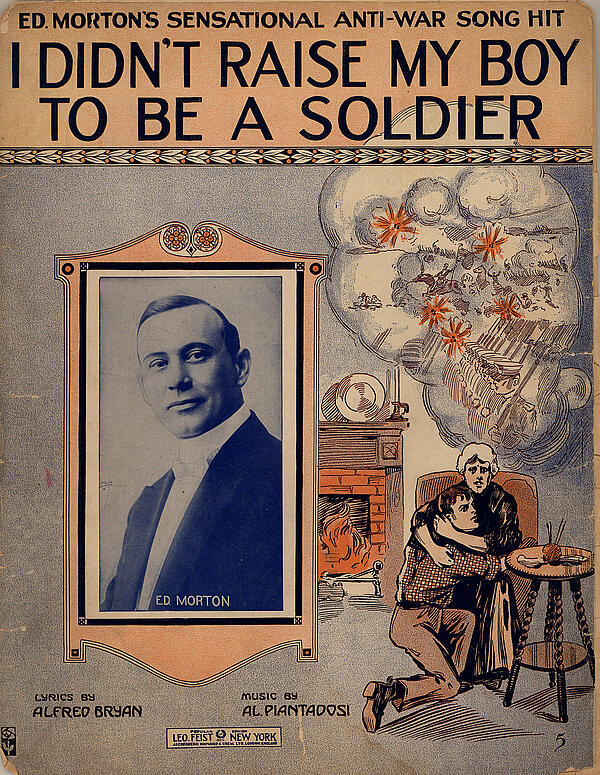
Posters were used to protest the war in 1915. 

The First Amendment is specifically important when people have opinions that disagree with the government. However, during wartime dissent can be viewed as unpatriotic or dangerous. A perfect example of what can happen when the government restricts anti-war speech is what happened during World War 1. 

Protests to the Sedition Act
During this time period, the government would prosecute anyone who criticized the government's war efforts or opposed the war. The Sedition Act of 1918 made it a federal crime to speak write or publish anything against the government. I believe this law was completely unjust and contradicts the first amendment. 

Dissent doesn't necessarily mean someone is against their country. Someone can disagree with a war while still caring about the country. Being able to question the government's decisions can help give other people different views to look from. Instead of everyone accepting one perspective. 

The government is so worried about people talking poorly about them that they try and censor all of the speech against them. This is a violation to our First Amendment and makes the government look even more guilty. 

Anti-War Website 

Aside from the traditional news, people have other ways to expresses their opinions such as independent publications like ANTIWAR.COM.  Even though authors are getting published and can speak freely on this website, it does not reach mainstream. I have never seen nor heard of this website. 

I think it's important for people to hear different opinions especially during wartime. The government is making decisions that can affect millions of people. If people are not allowed to speak against these decisions then we are only hearing one side of the story. People should be able to make their own opinions based on different information instead of only hearing what the government wants them to hear. 

Why does our protection under the first amendment become less important during wartime?

Thursday, September 10, 2026

Privacy, Online and Off

Police use automatic licence plate readers to collect data on civilians. 
Devices originally made for huge war efforts have now made there way into local police departments. The government and police forces are misusing this technology to gain detailed info about how citizens interact. The government knows way too much about each individual person in America and we should be more concerned about it.

Police will collect this data about civilians and make decisions on who they think you are based on everything they find. The main source of information comes from automatic licence plate readers. Police departments keep records of every plate that passes by.

Why do they keep this information???

Edward Snowden 
This data get stored in a massive data center. The cost of storing this data is surprisingly cheap, so they hang on to it in case they might find it valuable. In 2013 Edward Snowden leaked information that the government was collecting 1.7 billion electronic storings every day on massive server farms in Utah. He then fled the country to avoid arrest. Why is he the one getting in trouble, not the government?

The police and the government are abusing this information and data. NYPD has driven cars past religious ceremonies to see what citizens are going there and make assumptions on people. Organizations have asked for health apps info to target advertisements more directly. Police can send tracking signals inside people's houses to see whos phones are in there and track them more directly. With all of this information they can predict with 95% certainty anything about you. 

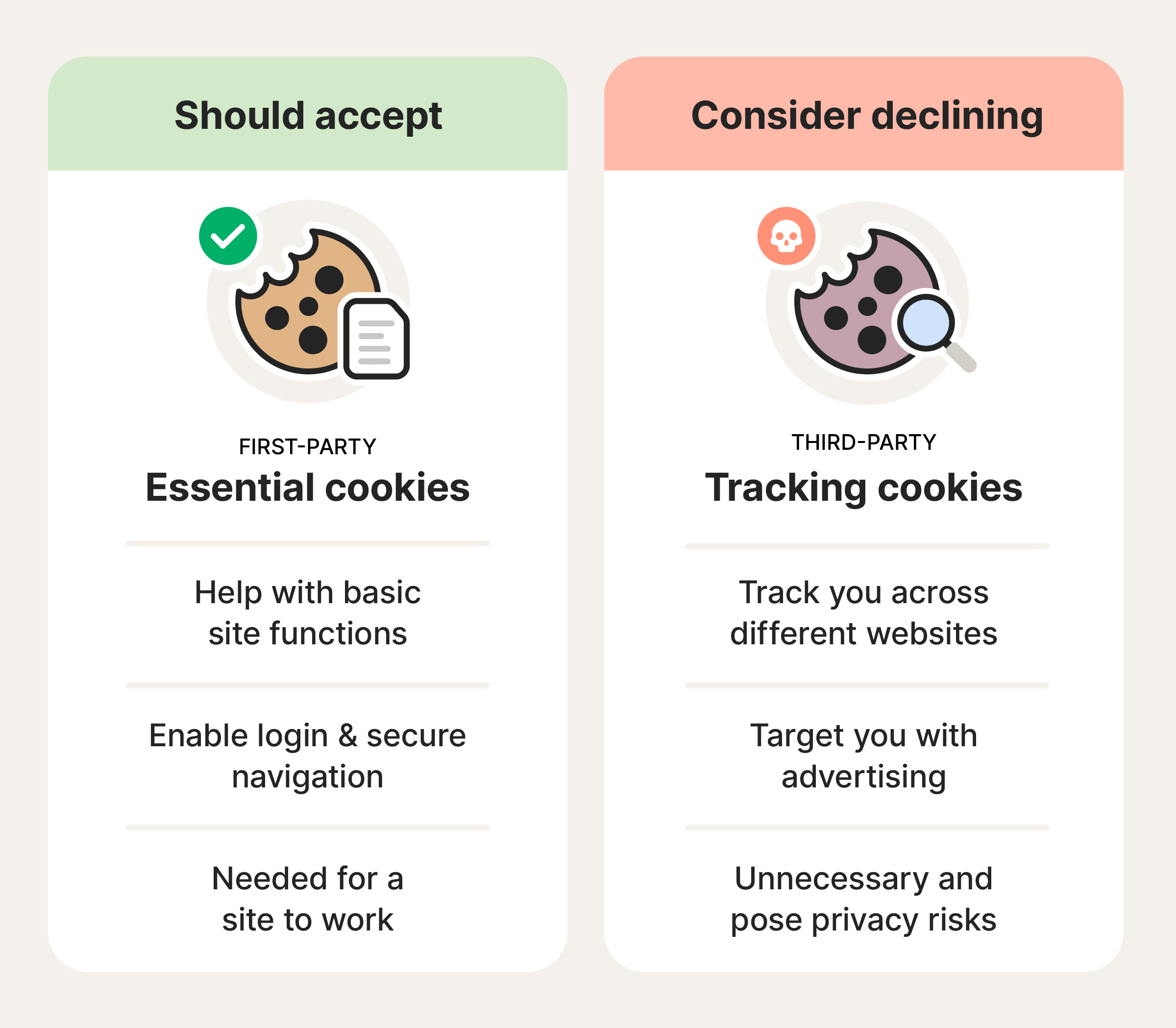
When to accept or decline cookies
My advice to you is to read the fine print and be more stingy. Just because you don't see it doesnt mean its not there. There are cameras everywhere. Every app on your phone has some sort of data storing. If you do not pay attention you will end up giving away your personal data which can be used against you.

Remember: When the first party (you) voluntarily gives info to a second party (companies), the first party relinquishes all control over third party (the government) downstream uses. 


Ai disclosure: No Ai was used on this assignment


Thursday, September 3, 2026

8 Values of Free Expression

After reflecting on the 8 Values of Free Expression there was one that stuck out to me.

Number 3, Stable Change.

Baruch Spinoza's Book
This value came from Baruch Spinoza's Tractatus Theologico-Politicus. It states that a government or society who lets angry, alienated people speak their mind, will be more stable. It suggests that being able to vent and let heat off about current issues will decrease the likelihood of people resorting to violence to express themselves. Another take on this value is that by letting people vent it draws attention to the issue to help the government monitor it incase it does result in violence.

What interested me about this value is the constant venting I see all over social media about the government or current issues. I believe that people enjoy venting and debating topics online more than trying to make a change in their said issue. Once the steam is blown off and people have gotten the chance to express their feelings they will kind-of move on. If we were not allowed to vent people would reach to get that attention and argument in more invasive ways which could be more dangerous.

This value and idea made me think into how this can be helpful in everyday issues and lifestyles. The psychology behind it is interesting, once people put their opinions into the air or vent about it, they feel better and are less aggressive towards it. I think this can be applied in any situation where an individual might feel angry or upset towards another person, group or organization. Using this method can help reduce violence everywhere.


The Reactance Theory Explained

A way we can explain this behavior is the Reactance Theory This theory explains that when people feel that their freedom is being taken away, they will push back harder against the restriction. On top of that, silencing them can add fuel to the fire. The feeling of freedom being stripped and then censoring their speech can cause huge retaliation. Allowing people the freedom to express their anger can calm them down. This theory helps us understand why Stable Change is such an important value of free expression. 

In my experience, I see examples of Stable Change all over my campus at High Point University. If a student feels angry towards a certain issue on campus I will frequently see posts on social media about it. This can then catch the attention of academic leaders such as faculty, department chairs or even the president. They can then monitor the situation but also look for ways to improve the issue. 

Parkevo Launch 

One example is the issue of limited parking spots on campus. Students will rage about this all over social media and complain to higher ups at High Point University. This issue allowed student all over shcool to connect over their shared frustration of parking issues. This then led to innovation, after realizing the University is not going to add more parking, students took matters into their own hands. The idea of Parkevo was created. This is an app that will show students where to find available parking spots. 

Stable Change can lead to innovation while simultaneously reducing violence.