|
| Before Emojis, Emoticons were crafted from keyboard keys. |
It started with a joke that went wrong.
In September 1982, Carnegie Mellon computer scientists were trading messages on an early online bulletin board. Someone posted a gag about a mercury-contaminated elevator. A few readers took it seriously.
Even after follow-up posts clarified it was satire, the confusion kept spreading. That mix-up sparked a real debate: how do you signal tone when all you have is plain text?
A professor named Scott Fahlman had the answer.
On September 19th, at 11:44 in the morning, he suggested using a colon, a hyphen, and a parenthesis, read sideways, to mark something as a joke — and the same combination facing the other way to mark something serious.
The smiley face was born, almost by accident, out of a need to prevent misunderstandings on a system where nobody could hear a joke in someone's voice.
For nearly two decades, that combo was as expressive as digital communication got. Then, in 1999, on the other side of the world, a different problem showed up.
 |
| The telecom company that created the Emoji |
quick, casual messages people wanted to send.
Kurita designed a set of 176 tiny pictures, each just 12 by 12 pixels, pulling inspiration from manga panels, kanji characters, and simple street signs.
That set became the foundation for what we now call emoji — a word that, fittingly, has nothing to do with the English "emotion" and everything to do with the Japanese words for picture and character. Kurita's original set is now preserved in the permanent collection of the Museum of Modern Art in New York.
What both inventions solved was the same underlying gap: text alone strips out tone of voice, facial expression, and body language — the things humans normally rely on to read intent.
Emoticons, and later emoji, gave people a shorthand for warmth, sarcasm, excitement, or sympathy that words on a screen couldn't reliably carry on their own. And it worked, fast.
As mobile messaging and social media exploded, emoji spread far beyond Japan, eventually standardized by Unicode in 2010 so a heart or a smiley face would render the same way across platforms.
By 2015, roughly 92 percent of people online were using emoji regularly. Oxford Dictionaries even named a single emoji its Word of the Year that year — a first for a symbol instead of an actual word.
But solving one problem created another. And this is the part that matters for anyone studying communication and law.
 |
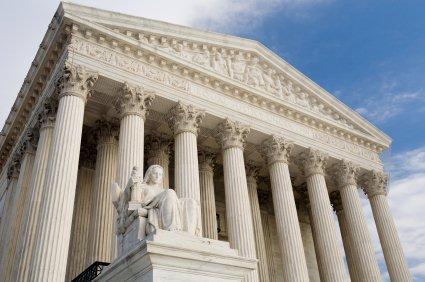
| Emoji interpretations seen in Court |
in harassment claims, criminal cases, and workplace disputes. Court cases referencing emoji have climbed sharply year over year, and judges have openly struggled to keep up.
There's no consistent legal standard for what a given emoji actually means.
One appellate court decided an upside-down smiley face signaled passive-aggression, citing a dictionary website in a footnote as its authority. In New Zealand, a threatening text ending in a plane emoji was found to intensify the threat behind the words, contributing to an eight-month prison sentence.
The same symbols meant to clarify intent can now become genuinely ambiguous evidence, shifting meaning across platforms, cultures, and generations — sometimes with real legal consequences attached.
That's the real legacy of the smiley face: a small fix for a communication gap that, more than forty years later, has become one of the more unsettled frontiers in digital evidence law.
Ai disclosure: The use of Ai was used in this post to gather information on the subject and format the post. I asked Claude to get information on the history of the emoji and the impact of it. I then asked for Claude to write the information in a blog post style with no more than 600 words. I also had Claude give me links to sources to embed into my post. I found the images on my own.